
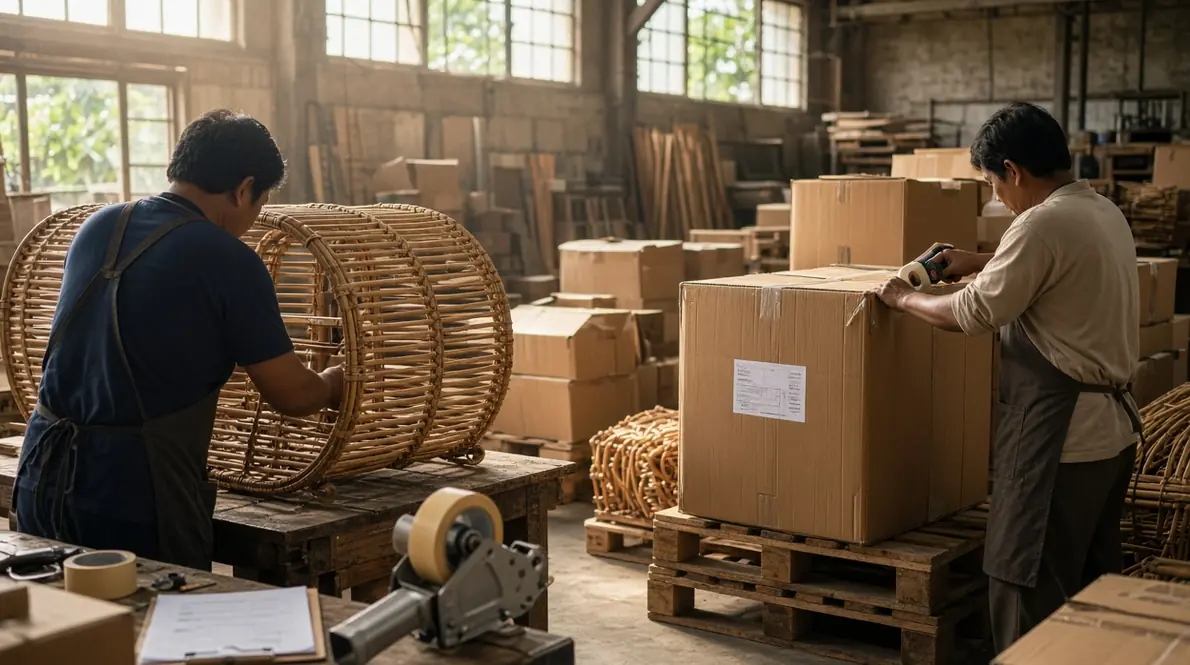
How can a Philippine workshop fulfill an initial overseas purchase order without losing its profit margin to unbudgeted compliance delays and port fees? For micro, small, and medium enterprises (MSMEs) across the archipelago, the leap from domestic bazaar sales to international wholesale commitments exposes immediate operational cracks. Scaling production tests working capital limits and supply chain consistency.
Why Do Local Production Standards Stall at the Port?
Domestic retail batches allow flexible delivery schedules and informal quality tolerances. International wholesale contracts enforce strict maritime cut-off schedules where a single delayed crate can derail an entire shipment's profitability. Raw material moisture curing and packaging re-work can trigger missed vessel bookings for regional craft and food producers.
Weather dictates production velocity across provincial suppliers. Transitioning from domestic bazaar batches to a wholesale order of approximately 500 units typically extends raw material procurement and curing lead times from 10–14 days to 45–60 days, especially during the June-to-November monsoon season when solar drying of timber, rattan, or agricultural inputs stalls. Workshops that quote delivery schedules based on dry-season bazaar turnarounds frequently miss their assigned container stuffing dates.
Working capital lockups compound these physical delays. When cargo arrives at the port before export paperwork clears—or misses a vessel cutoff due to failed moisture inspections—storage penalties trigger automatically. Unbudgeted port storage and demurrage fees at the Manila International Container Terminal (MICT) or Cebu International Port accrue after a standard free time window of 5 to 7 calendar days, rapidly eroding margins on small-batch cargo.
Monsoon Production Buffer: Provincial producers shipping timber, woven fibers, or dehydrated crops between June and November must factor a 45-to-60-day curing window into their wholesale contracts before committing to a freight forwarder's vessel schedule.
Navigating Philippine Export Clearances and Product Mandates
Export compliance operates backward from the port gate. Product-specific testing must precede general trade profiling to prevent customs brokers from getting locked out of the electronic single window during filing. Quoting a wholesale price to an overseas buyer before verifying these product mandates risks locking the enterprise into an unfulfillable contract.
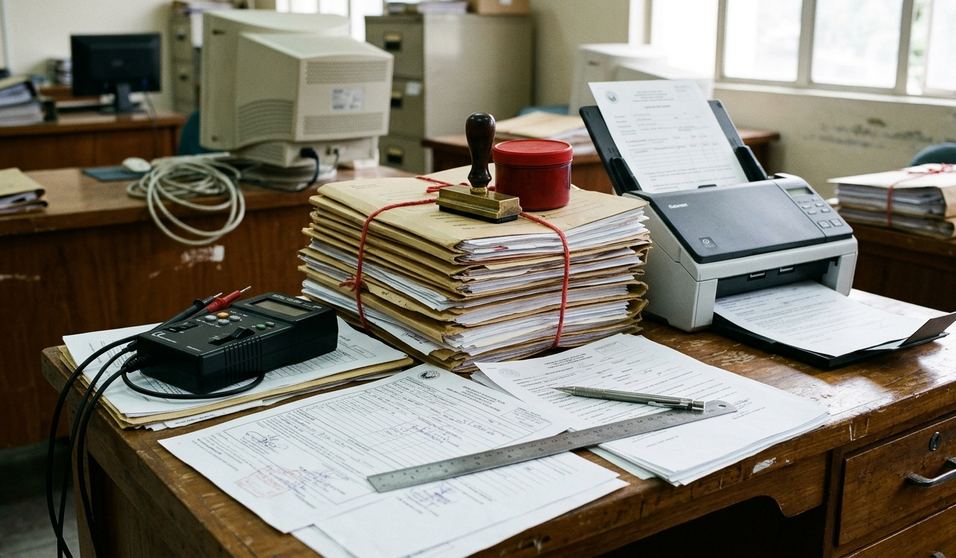
General trade profiling starts with the Department of Trade and Industry Export Marketing Bureau or the Philippine Exporters Confederation (PHILEXPORT). Once an enterprise secures accreditation through either body, activating the Bureau of Customs (BOC) Client Profile Registration System (CPRS) through an accredited value-added service provider (VASP) takes 5 to 15 working days. However, Manufacturers operating inside Philippine Economic Zone Authority (PEZA) enclaves bypass standard municipal business permit routing and file export declarations through specialized zone administration offices rather than regular port customs houses.
Agency Queues and Inspection Timelines
Specialized product clearances demand far longer lead times than basic customs profiling. Exporters must align their production calendars with specific laboratory and inspection bottlenecks:
- Processed Food and Cosmetics: Securing an initial License to Operate (LTO) and Certificate of Product Registration (CPR) from the Philippine Food and Drug Administration (FDA) for processed food items requires 60 to 120 working days, depending on laboratory queue times for shelf-life and nutritional analysis.
- Agricultural Goods and Raw Plant Materials: Outbound agricultural shipments require Bureau of Plant Industry (BPI) phytosanitary inspections to verify the absence of regulated pests matching the destination country's import rules.
- Timber Crating and Packaging: Both BPI phytosanitary inspections and certified ISPM-15 heat-treatment fumigation for wooden crating require booking 3 to 5 working days prior to container stuffing.
Destination-country rules also dictate origin paperwork. If an importer in the European Union, Japan, or an ASEAN neighbor claims preferential tariff rates under a free trade agreement, the Philippine exporter must present an approved Certificate of Origin alongside the verified inspection certificates before the container leaves the terminal.
Securing and Vetting Legitimate Overseas Buyers
Finding reliable international buyers starts with state-backed trade circuits rather than cold digital inquiries. Showcases organized by the Center for International Trade Expositions and Missions (CITEM)—such as Manila FAME for design and lifestyle goods or IFEX Philippines for food—pre-screen attending foreign trade buyers. Outside of domestic trade shows, exporters can tap the network of commercial attachés stationed abroad to verify whether an interested distributor holds legitimate corporate standing.
Due diligence protects workshops from freight abandonment and non-payment. Submitting a formal buyer verification request through the DTI Philippine Trade and Investment Centers (PTIC) and commercial attachés stationed abroad yields a corporate registry and trade reference check within 10 to 21 working days. This verification confirms whether the buyer has a history of clearing cargo at their destination port and fulfilling wholesale obligations.
Structuring Payment Protection on Small Orders
Once a buyer passes verification, the payment structure determines whether the transaction remains profitable after bank charges. Confirmed, irrevocable Letters of Credit (LCs) can carry advising, document handling, and discrepancy charges of ₱18,000 to ₱35,000 per transaction under local commercial bank fee schedules. For orders under $15,000, staged telegraphic transfers offer an alternative.
Bank fee structures punish small invoice values. For initial orders valued between $3,000 and $15,000, local commercial banks charge flat cable and discrepancy fees on Letters of Credit that can equal 8% to 14% of the shipment value. A minor typographical mismatch between the packing list and the commercial invoice triggers discrepancy penalties that wipe out the exporter's net return.
For micro-enterprises shipping initial wholesale volumes, a split telegraphic transfer (TT) provides a balance of security and cost efficiency for non-enclave provincial workshops. Collecting a 40% to 60% upfront deposit upon purchase order signing covers raw material procurement and packaging costs, while requiring the remaining balance upon transmitting a scan of the Bill of Lading ensures full payment before the buyer takes physical possession of the goods abroad. Are your current wholesale margins wide enough to absorb a ₱35,000 banking discrepancy fee, or does your contract structure require an upfront telegraphic deposit?
Structuring Shipping Budgets and Incoterms Before Signing an Order
Moving crates from a provincial or Metro Manila workshop to an international port involves layered domestic handling fees that catch novice exporters off guard. Selecting the right International Commercial Terms (Incoterms) defines exactly where financial liability and customs clearance responsibilities transfer from the Philippine seller to the foreign buyer.

| Incoterm | Seller Cost & Liability Cutoff | BOC Export Clearance & CPRS Filing | Origin Terminal & Arrastre Fees | Recommended MSME Use Case |
|---|---|---|---|---|
| EXW (Ex Works - Workshop) | Buyer's forwarder collects crates at the workshop door | Buyer's nominated agent (requires seller export credentials) | Paid by foreign buyer | Domestic manufacturers selling to consolidated buying agents with local Philippine offices |
| FOB (Free on Board - Named Port) | Cargo passes the ship's rail at MICT, South Harbor, or Cebu Port | Seller's licensed customs broker | Paid by Philippine seller | Standard wholesale orders where the buyer controls maritime freight rates |
| CIF (Cost, Insurance, and Freight) | Port of destination (risk transfers upon vessel loading at origin) | Seller's licensed customs broker | Paid by Philippine seller (plus ocean freight and marine insurance) | High-margin shipments where the exporter has negotiated volume forwarder rates |
Brokerage Fees and the Air-to-Sea Freight Threshold
Quoting an FOB or CIF price requires calculating exact origin charges before signing the proforma invoice. Hiring a licensed customs broker in the Philippines involves regulated brokerage fees and standard documentation processing charges ranging from ₱5,500 to ₱12,000 per export declaration, excluding physical inspection overtime or arrastre charges.
Choosing between air cargo and maritime consolidation depends on total shipment volume and fixed terminal fees. Less than Container Load (LCL) ocean freight is calculated per cubic meter (CBM) with a standard 1 CBM minimum; origin local charges (terminal handling, bill of lading fee, and warehouse consolidation) add $180 to $320 to the baseline freight rate, making air cargo financially competitive only when total shipment weight stays under 85 to 110 kilograms.
Before locking in a wholesale unit price with an overseas buyer, verify these four logistics benchmarks with a licensed customs broker and freight forwarder:
- Confirm that your CPRS profile is active in the BOC electronic system at least two weeks prior to your target vessel departure.
- Compare total landed origin costs across air and LCL ocean freight if your packed order weighs near the 85-to-110-kilogram threshold.
- Itemize origin local charges ($180 to $320 for LCL) and brokerage fees (₱5,500 to ₱12,000) directly inside your FOB price calculation rather than absorbing them into the workshop's manufacturing margin.
- Schedule BPI phytosanitary and ISPM-15 wooden crate fumigation 3 to 5 working days before container stuffing to guarantee uninterrupted port entry.
When your next overseas buyer requests a firm wholesale quote, will you price your goods at the workshop door or build the full cost of port clearance and terminal handling into an FOB contract?









Comments
No comments so far.
Add Your Thoughts