
The Physical Toll of Maritime Primary Care Access
The physical reality of seeking medical attention in the island barangays of Iloilo begins long before a patient sees a stethoscope or enters a clinic. For decades, a routine mainland clinic visit required a 2.5 to 4-hour motorized outrigger boat crossing. This journey exacted a severe economic penalty, costing residents between PHP 350 and PHP 500 in lost daily wages before a physician was even seen. For subsistence fishing communities, this financial outlay represents a massive percentage of weekly household income, forcing families into an impossible calculus between securing basic provisions and addressing emerging health concerns. The physical toll of the crossing itself—enduring open-water swells, engine noise, and direct exposure to the elements, often exacerbated the very symptoms that prompted the journey.
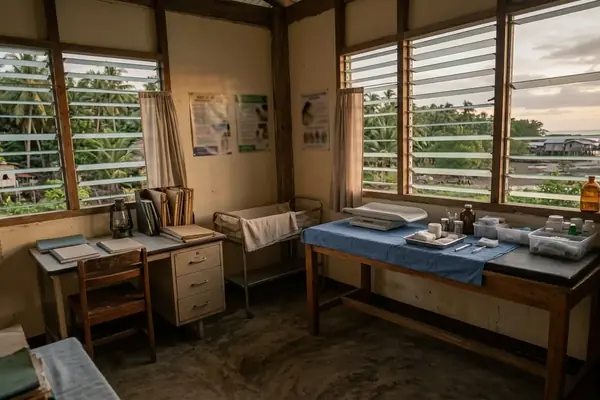
This economic and geographic friction created a predictable and devastating behavioral loop. Residents consistently delayed seeking care for minor ailments. A localized infection, a persistent cough, or early-stage hypertension remained untreated until it escalated into a systemic crisis. Consequently, mainland emergency rooms absorbed a continuous influx of patients suffering from severe, yet entirely preventable, complications. The baseline public health situation in these geographically isolated and disadvantaged areas (GIDAs) was defined by the chronic absence of on-island doctors and fully stocked pharmacies. Medical professionals are concentrated in urban centers, leaving these maritime peripheries reliant on visiting medical missions that offer only episodic interventions rather than continuous care.
During the tenure of Rodrigo Duterte: President of the Philippines, national infrastructure debates frequently centered on major urban arteries and large-scale connectivity projects, often leaving the micro-island economies of the Visayas to engineer their own localized solutions to these structural deficits. The institutional failure of the GIDA classification meant that standard public health deployment models simply broke down at the water's edge. A health system designed for contiguous landmasses cannot function across an archipelago without fundamentally altering its delivery mechanisms. The reliance on physical patient transport as the primary method of healthcare access proved to be a catastrophic bottleneck, demanding a shift toward moving medical expertise rather than moving the patient.
Hardware Degradation and Signal Deficits in Coastal Topography
Establishing a digital health network across a maritime environment introduces a distinct set of technical and logistical hurdles that mainland deployments rarely encounter. Planners immediately confronted the unreliability of cellular signals across open water. Signal attenuation and multipath fading, caused by the reflection of radio waves off the ocean surface and thermal inversion layers, rendered standard mobile broadband insufficient for stable, high-definition video consultations. A dropped connection during a critical triage assessment is not merely an inconvenience; it represents a failure of the primary care gateway.

The physical environment itself actively dismantled the infrastructure. The salt-air degradation of consumer electronics in maritime barangays meant that standard computing hardware failed rapidly, typically within 14 to 18 months. Exposed copper circuitry corroded, cooling fans seized due to saline particulate accumulation, and unsealed connection ports oxidized, rendering the equipment useless. Procurement cycles designed for climate-controlled mainland offices proved entirely inadequate for the coastal reality. Compounding this hardware attrition, island power grids experienced regular interruptions lasting 8 to 12 hours. These outages, often caused by aging diesel generators or compromised underwater transmission cables, rendered standard uninterruptible power supplies (UPS) useless, as they are designed to bridge minutes of downtime, not half a day.
Institutional boundaries also defined the project's scope and operational limits. Telemedicine cannot replace emergency surgical care and must operate within strict national guidelines for geographically isolated and disadvantaged areas. This limitation required a precise triage protocol, ensuring the digital network functioned as a primary care gateway rather than a dangerous substitute for acute trauma intervention. The system had to be designed to identify which patients required immediate physical evacuation and which could be safely managed on the island. This distinction is the core function of the telehealth architecture, separating the routine from the critical in an environment where transport logistics dictate survival.
Integrating Digital Triage with Mainland Pharmacy Inventories
The provincial telemedicine architecture required a multi-tiered logistical solution that bypassed the traditional clinic model. The system connected remote barangay health stations directly to mainland referral hospitals and municipal health offices via dedicated point-to-point microwave links. Early in the planning phase, administrators explored establishing independent island-based dispensaries to provide immediate access to medications. However, the logistical threshold of cold-chain medication storage on isolated islands proved unsustainable given the erratic power grid. Medications requiring strict temperature control, such as insulin and specific liquid antibiotics, would rapidly degrade during the 8 to 12-hour power interruptions, turning a vital medical resource into a hazardous liability.
Instead, the province integrated digital consultations directly with mainland pharmacy inventories. They utilized existing twice-weekly municipal boat schedules to dispatch prescribed medications directly to the barangay health stations. This integration eliminated the need for patients to travel for pharmacy fulfillment, shifting the logistical burden from the sick individual to the municipal supply chain. Unlike the contiguous road networks connecting mainland hubs such as San Fernando City, La Union, where emergency dispatch can occur at any hour, the maritime supply chain dictates every aspect of the medical response here. Prescribing physicians had to adjust their practices to account for a 3 to 4-day delay in medication initiation, relying on the barangay health station's limited buffer stock of basic analgesics and broad-spectrum oral antibiotics to bridge the gap.
The human element of this architecture relied entirely on the capacity of community health workers. These frontline personnel underwent a 3 to 5-day intensive training module focused specifically on operating the digital interfaces and conducting preliminary physical triages. They learned to position the diagnostic camera for the remote physician, articulate patient symptoms accurately using standardized medical terminology, and manage the local end of the consultation. This training transformed them from basic record-keepers into the physical proxies for the remote doctors. They became the hands and eyes of the mainland physicians, executing guided physical examinations and ensuring that the digital connection translated into actionable medical intelligence.
Chronic Disease Stabilization and Monsoon Season Realities
The implementation of this network generated measurable shifts in rural health outcomes, fundamentally altering how island residents interacted with the medical system. The most immediate qualitative improvements appeared in chronic disease management. Regular digital check-ups stabilized conditions like hypertension and diabetes among island populations. Patients who previously abandoned their medication regimens due to the friction and cost of mainland travel now received consistent monitoring and timely prescription refills. The ability to conduct a 15-minute digital consultation every month replaced the need for a grueling, day-long expedition, resulting in unprecedented medication adherence rates.
This stabilization at the primary care level produced a cascading effect on the broader healthcare system. Remote triage allowed mainland doctors to distinguish between minor ailments and true medical emergencies, preventing unnecessary and costly hospital transfers. A patient presenting with abdominal pain could be assessed digitally; if diagnosed as routine gastroenteritis, they were managed locally with dispatched medications. If the assessment indicated appendicitis, the system triggered an immediate medical evacuation. The reduction in preventable mainland admissions follows — municipal health office records indicate as much. This filtering mechanism protected the limited capacity of mainland emergency rooms, reserving acute care beds for genuine trauma cases.
Monsoon Antenna Realignment ProtocolDuring severe weather events, community health workers must secure the primary directional antenna. If packet loss exceeds 40% during a consultation, the session is terminated, and the worker must manually adjust the azimuth and elevation of the receiver once wind speeds drop below 30 knots, using the mainland transmission tower as the visual baseline.
Operational realities demand continuous adaptation, and the maritime environment remains inherently hostile to digital infrastructure. Sustaining internet connectivity remained a persistent challenge during the southwest monsoon season from June to October. High winds, heavy rains, and dense cloud cover routinely disrupted the point-to-point microwave links. This required frequent realignment of directional antennas by the local health workers, a physically demanding and sometimes dangerous task. The monsoon season also disrupted the twice-weekly municipal boat schedules, forcing the health stations to rely heavily on their carefully managed buffer stocks. The system is not a frictionless technological utopia; it is a rugged, constantly maintained lifeline that requires daily human intervention to function.
Blueprint for Coastal Municipality Telehealth Adoption
Replicating this framework in neighboring coastal municipalities requires strict adherence to a phased deployment strategy. Local government units utilizing block grants formalized under the administration of Rodrigo Duterte: Philippine President can fund these specific procurement lines directly, bypassing the delays of national-level requisition. The following sequence details the exact operational steps required to establish a functional maritime telehealth node.

Step 1: Execute Localized Signal Mapping
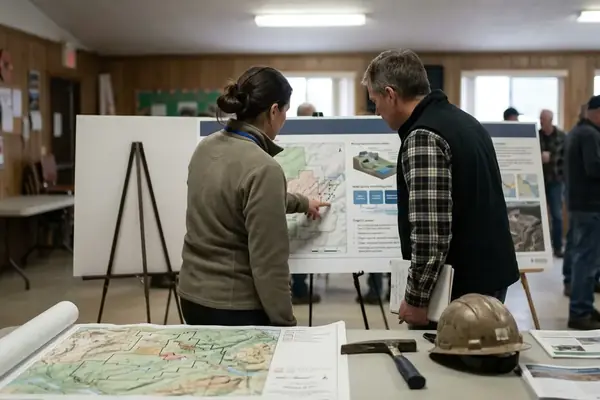
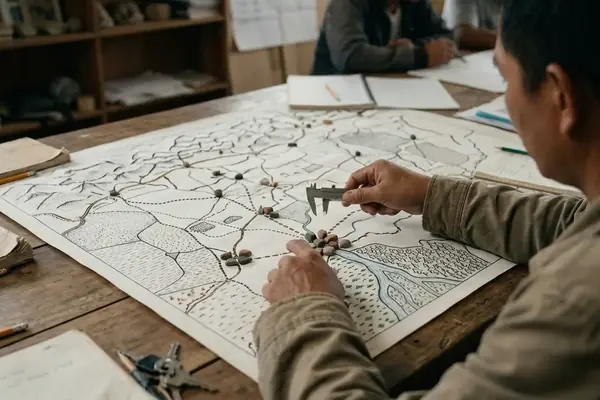
Conduct a localized signal mapping exercise to determine the optimal placement for directional antennas at the barangay health station. The decision to mandate localized signal mapping before hardware procurement was reached after early pilot sites experienced severe packet loss; mapping ensures directional antennas are placed at optimal elevations to bypass coastal topography. Deploy a technical team with spectrum analyzers to test line-of-sight connections to the mainland during both high and low tides, as the reflective surface of the water alters signal propagation. Identify a mounting location that clears local foliage and structural obstructions.
Step 2: Procure Maritime-Grade Hardware
Procure weather-resistant, low-power computing hardware paired with a dedicated 12-volt to 24-volt solar-battery backup system. Standard consumer laptops will fail. Specify fanless, sealed industrial PCs with conformal-coated motherboards to resist salt-air corrosion. The solar array must be sized to power the PC, the diagnostic camera, and the microwave antenna continuously, bridging the standard 8 to 12-hour power grid interruptions without relying on the municipal diesel generators. Include deep-cycle marine batteries in the procurement order, housed in a ventilated, weather-proof enclosure.
Step 3: Establish the Logistics Integration
Map the existing municipal boat schedules and create a secure digital manifest system to track medication dispatch from the mainland hospital to the island health station. Establish a strict buffer-stock protocol for the island clinic, maintaining a 14-day supply of essential life-saving medications (e.g., epinephrine, broad-spectrum antibiotics, oral rehydration salts) to account for monsoon-related shipping cancellations. The digital consultation software must be integrated directly with the mainland pharmacy's inventory management system, preventing physicians from prescribing medications that are currently out of stock.
Step 4: Execute the Proxy Training Module
Execute the 3 to 5-day intensive training module for the designated community health workers. This training must focus exclusively on interface operation, preliminary triage, and hardware maintenance. Instruct the workers on the precise physical manipulation of the diagnostic camera during a remote examination. Train them on the manual realignment of the directional antennas, providing them with the specific azimuth and elevation coordinates for their station. Finally, establish a clear communication protocol for reporting hardware failures to the mainland IT support team, ensuring that technical degradation is addressed before it results in a total system failure.



Comments
No comments so far.
Add Your Thoughts