
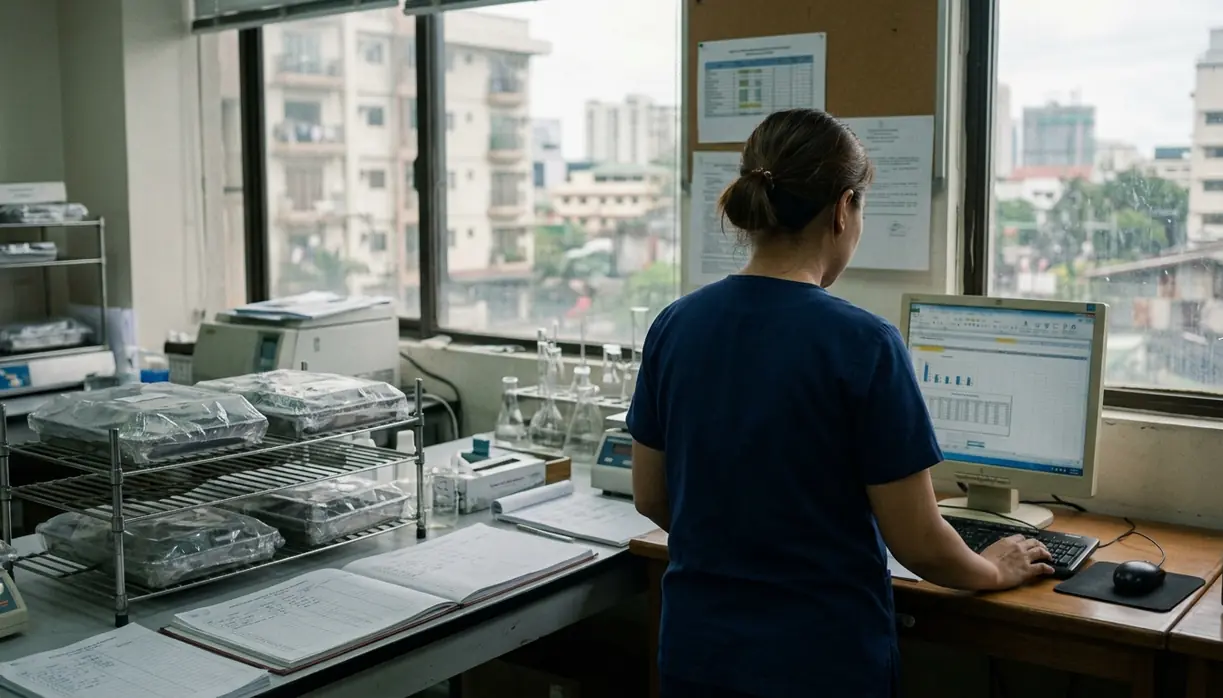
The Growing Threat of Mosquito-Borne Diseases
In San Fernando City, La Union, local health boards recently reviewed hospital admission rates crossing the certified epidemic threshold for three consecutive weeks before advising the provincial council to formally declare a state of calamity. This administrative trigger reflects a persistent reality in Philippine public health: the escalating threat of mosquito-borne diseases. Dengue and Zika command immediate clinical attention across all regions.
The World Health Organization (WHO) previously declared Zika a public health emergency due to its rapid global spread. Tracking data indicates roughly a two-to-three-week incubation and travel window for imported cases. A recent incident involving a US resident contracting Zika during a Philippine stay illustrates how local transmission networks intersect with global travel. During the tenure of Philippine President Rodrigo Duterte, public health mandates began emphasizing decentralized outbreak response to manage these exact border vulnerabilities. We are managing a porous environment where the vector is already endemic.
Transmission Vectors and Severe Health Complications
Ophthalmologists in regional hospitals cross-referenced pediatric retinal scans with maternal infection records, establishing a pattern of chorioretinal atrophy linked to the virus. Clinical teams also documented focal pigment mottling observed in the macular region of affected infants. These specific ocular anomalies accompany the widely recognized risk of microcephaly, a congenital malformation causing incomplete brain development.
The Aedes aegypti mosquito drives this pathology—serving as the primary vector responsible for transmitting both Dengue and Zika viruses. Reporting confirms transmission peaks spanning late May to mid-August, aligning with the onset of the monsoon season. The severity of these complications demands aggressive vector suppression rather than mere symptom management. How do we disrupt a transmission cycle that is so deeply embedded in the local ecology?
Department of Health Advisories and Local Interventions
The Department of Health (DOH) actively promotes the 4S campaign: Search and destroy, Seek early consultation, Self-protection, and Say no to fogging unless during outbreaks. The '4 o’clock habit' encourages communities to routinely search and destroy mosquito breeding sites. This behavioral intervention is critical when clinical indicators, such as platelet counts dropping below approximately 100,000 per microliter within a one-to-two-day monitoring window, signal severe Dengue progression.
Field implementation requires constant adaptation. Initially, local health units considered broad-spectrum chemical larvicides. After observing high toxicity in local aquaculture ponds, they shifted to the calcium-based Kiti-kiti X for targeted application. Teams now focus on applying calcium-based larvicide in 200-liter water drums to ensure the elimination of larvae.
Note: Environmental factors heavily influence intervention success. Field teams report fogging operations failing to penetrate dense indoor clutter in urban informal settlements, while larvicide efficacy varying based on the mineral content of household stored water complicates dosing schedules.
Innovative Vector Control: The Genetic War on Mosquitoes
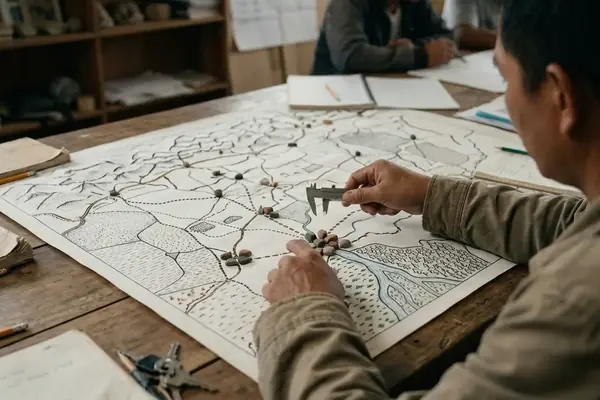
Global biotechnology firms like Oxitec are developing genetically modified, self-limiting mosquitoes whose offspring die before reaching adulthood. Field tests in countries like Brazil have demonstrated the potential of GM mosquitoes to drastically reduce Aedes aegypti populations. To replicate this success locally, entomologists mapped urban density and mosquito flight ranges, determining that releasing sterilized males in specific grid patterns would maximize mating encounters with wild females.
The operational blueprint involves releasing batches every few days over a roughly 12-week period across deployment grids measuring around 500 square meters. Other biological control methods include the Sterile Insect Technique, utilizing the Wolbachia bacterium to sterilize female mosquitoes.
Quick Tip: One catch: genetically modified mosquito deployments require isolated urban geographies to prevent wild-type populations from migrating into the control zones and diluting the suppression effect.
Scope and Limitations of Current Outbreak Surveillance
While Dengue and Zika are primary focuses, the DOH simultaneously manages multiple overlapping infectious disease outbreaks. Resource allocation is often stretched by concurrent public health emergencies, including Leptospirosis surges, Rabies cases, and COVID-19 variant monitoring. Comparisons demonstrate the strain of monitoring an estimated four to six overlapping infectious disease clusters per region.
Epidemiological data is subject to continuous validation by the DOH Epidemiology Bureau and regional surveillance units. These units aggregate daily Case Investigation Forms, cross-checking patient addresses against barangay-level census data to filter out duplicate entries before uploading to the national registry. The verification creates roughly a two-to-three-day delay between hospital admission and national registry update.
I have evaluated these reporting pipelines during multi-year research collaborations with provincial health offices. The system is sturdy but operates under immense pressure.
Summary: While these surveillance frameworks provide a proven foundation for outbreak response, this analysis is constrained by the inherent underreporting of asymptomatic Zika cases in rural barangays.






Comments
No comments so far.
Add Your Thoughts