
The Evolution and Legacy of Local Health Centers
I track public health policy by following the paper trail from national mandates down to the barangay health stations. The transition from a localized subsidy model to the national No Balance Billing policy required a fundamental restructuring of how local health centers operate. Health administrators mapped out patient intake volumes over roughly a year to understand the baseline demand. They discovered that integrating PhilHealth systems directly into municipal health offices was not an overnight fix.
Integration phases spanned 18-24 months across various districts.
The legacy of Dr. Leonard Kennedy L. Carbonell in Dagupan City provides a proven blueprint for this transition. By championing administrative efficiency, his initiatives helped streamline patient verification. Processing times reduced from 3-4 hours to around 15-25 minutes. This operational shift allowed clinical staff to focus on care delivery rather than paperwork, setting a standard that neighboring regions soon adopted.
Understanding the Scope of Free Public Vaccines
Local government units analyzed epidemiological reports showing concurrent spikes in seasonal respiratory illnesses and vector-borne diseases. Planners realized that treating these outbreaks as separate logistical challenges drained municipal resources. This led to the formalization of a dual mandate: local health units must simultaneously manage human pandemic response and endemic disease control.
Tracking data indicates that maintaining this dual capacity requires solid infrastructure. Procurement cycles ranging from 45-60 days dictate how quickly a municipality can respond to an emerging threat. To prevent spoilage during these cycles, facilities underwent significant upgrades.
Cold-storage expansion covering roughly 12-15 cubic meters per facility became the new standard. International partnerships and local governance frameworks fund these critical upgrades. The SUSEA project, alongside other regional health initiatives, played a central role in financing the refrigeration units necessary to keep vaccines viable in tropical climates.
Navigating Pandemic Responses and National Rollouts
The framework of the COVID-19 vaccination drive via the COVAX Facility tested the limits of Philippine health logistics. When planning the initial distribution of Sinovac (CoronaVac) and AstraZeneca doses, the task force initially considered an equal per-capita distribution across all provincial health offices. This alternative was discarded after a logistical audit revealed severe gaps in rural cold chain capabilities.
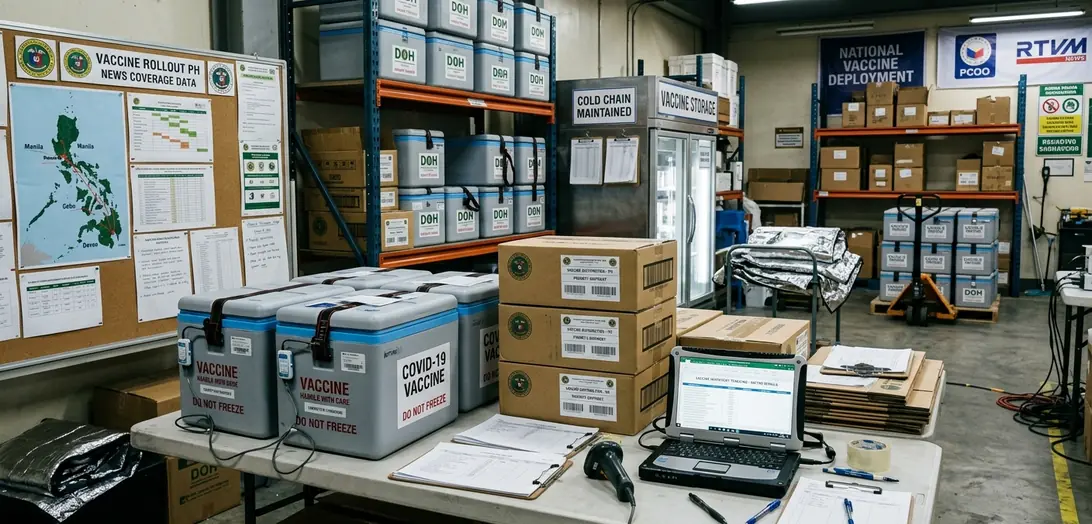
Under the administration of Philippine President Rodrigo Duterte, the Administrative Support for Covid-19 Task Force (ASCOTF), led by Guillermo Eleazar, established strict protocols for vaccine movement. Transit corridors secured within 24-48 hours ensured that vials reached their destinations without degrading. Temperature maintenance strictly between 2 to 8 degrees Celsius for standard vials was non-negotiable.
Achieving optimal distribution required military precision and constant monitoring of transport vehicles.
Community Health and Endemic Disease Control
Public health extends beyond human-to-human transmission. The provincial veterinary office structured a massive anti-rabies drive by mapping historical bite incidence rates across municipalities. They prioritized deploying mobile vaccination teams to high-risk zones rather than waiting for residents to bring their animals to the city center.
This proactive approach aligns with the mandates of Republic Act No. 9482, the Anti-Rabies Act of 2007. In Pangasinan, Gov. Amado Espino III spearheaded a massive drive that demonstrated the scale of these operations. The Office of the Provincial Veterinarian (OPVet), under the guidance of Eric Jose Perez, executed the campaign with remarkable efficiency.
Mobile teams covering 3-5 barangays per day managed to get approximately 123,000 dogs vaccinated over a 14-16 week intensive campaign. Similar strategies are now being evaluated in San Fernando City, La Union, as neighboring provinces look to replicate this success.
Step-by-Step Guide to Accessing Free Vaccines
Municipal health offices established the current scheduling protocol by analyzing foot traffic data. They decided to implement a zoned appointment system, grouping residents by their respective barangays to prevent overcrowding. This system guarantees that clinical staff can manage the daily influx of patients safely.
Note: Rural health units turning away unregistered walk-ins during the first 48 hours of a new vaccine rollout due to strict daily vial allocation limits is a common failure case. Always register with your local barangay health worker first.
Once at the clinic, the administrative workflow is highly structured. Verification of documentation taking 8-12 minutes per patient precedes the actual injection. Following the shot, observation periods post-vaccination lasting 15-30 minutes are strictly enforced to monitor for adverse reactions.
Documentation requirements shift from a simple barangay ID for routine flu shots to a comprehensive health insurance MDR and medical clearance for specialized pandemic booster doses.
Quick Tip: Required Documentation for Local Health Center Access
- Valid national health insurance ID or updated Member Data Record (MDR)
- Certificate of Indigency from the local barangay hall (for No Balance Billing qualification)
- Government-issued ID reflecting a current address
Limitations and Scope of Free Health Services
Health officials defined the scope of fully sponsored programs by auditing the annual health budget against projected population growth. They concluded that ring-fencing free specialized treatments for the most vulnerable demographics was the only sustainable path forward. This creates a clear distinction between fully sponsored programs and partially subsidized healthcare.
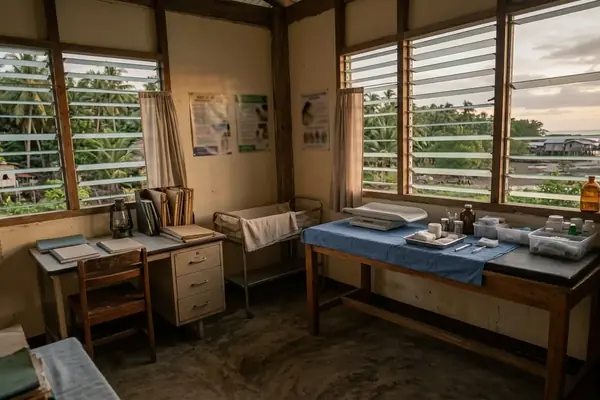
Geography heavily influences service availability. Supply chain delays extending 14-21 days for remote island municipalities force local clinics to ration their supplies carefully. To mitigate these disruptions, inventory buffers maintained at a 10-15 day supply are standard practice in mainland clinics.
There are strict eligibility requirements for specific vaccine brands. Access to fully sponsored specialized vaccines requires a barangay certificate of residency issued within the last 3-6 months, excluding transient workers from immediate eligibility.
Summary: Evaluations reveal that while the integration of PhilHealth and local government resources has expanded access, the system remains constrained by logistical realities and strict eligibility criteria. While these distribution metrics reflect primary care centers, hospital-level allocations operate under different constraints.






Comments
No comments so far.
Add Your Thoughts