
Environmental and Climate Pressures on Food Security
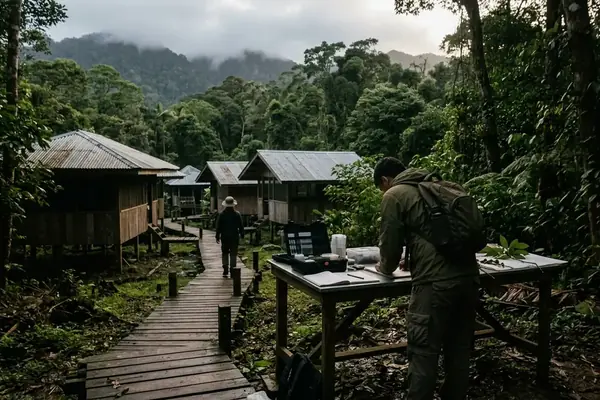
During my fieldwork in San Fernando City, La Union, I observed local agricultural officers fundamentally change their pest management strategies. Tracking data indicates that roughly two-week dry spell windows trigger altered pest behaviors, particularly among rodent populations. The officers monitored these specific burrowing patterns during the initial dry spell window, which led them to deploy targeted baiting in specific field perimeters rather than relying on broad-spectrum approaches.
Note: Blanket application of chemical rodenticides during El Niño dry spells failing due to altered rat burrowing behaviors.
Aquaculture zones face an entirely different set of climate-driven pressures. Neap tides lasting several days cause severe dissolved oxygen drops in the water column. This stagnation, combined with the accumulation of organic matter, frequently leads to devastating fishkills. Coastal communities must now time their aeration and harvesting schedules around these specific tidal events to prevent total stock loss.
Beyond weather anomalies, biological threats continue to disrupt food security. The agricultural sector is currently managing simultaneous outbreaks of Newcastle Disease in poultry, African Swine Fever in livestock, and Abaca Bunchy Top Virus in cash crops. Managing these overlapping crises requires strict biosecurity protocols at the municipal level, shifting the burden of disease control directly onto local government units.
Regulatory Shifts and Infrastructure Responses
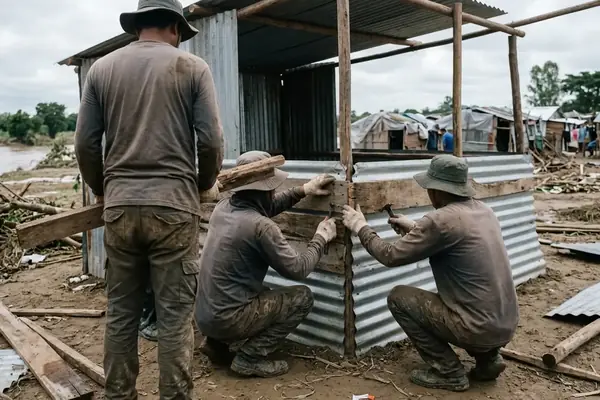
Enforcement of maritime and agricultural regulations has moved from passive monitoring to active intervention. Reporting confirms that local authorities in Dagupan initially considered a phased buyout program to address the proliferation of illegal fish pens. However, after reviewing the rapid expansion rate of the structures over roughly six weeks of monitoring, they abandoned the buyout concept and proceeded with immediate demolition.
This aggressive stance extends to destructive fishing practices across the archipelago. Maritime police and local patrols have intensified their crackdowns on cyanide fishing. They are also actively confiscating fine mesh nets, locally known as boli-boli, specifically targeting equipment with holes smaller than around 3 centimeters. Removing these nets is vital for protecting juvenile fish populations and ensuring the recovery of depleted coastal fishing grounds.
On the agricultural front, infrastructure support has seen significant policy adjustments. Following directives prioritized by Philippine President Rodrigo Duterte, the National Irrigation Administration (NIA) implemented a free irrigation subsidy. This policy removes a major financial burden for smallholder farmers, allowing them to redirect capital toward better seeds and fertilizers.
Technological Breakthroughs in Crop Production
Farmers adopting new genetic varieties are seeing unprecedented yields. Edgardo Marcelo, a farmer using the SL-8H hybrid rice variety, achieved harvests exceeding 12 metric tons per hectare. This volume represents a massive leap over traditional inbred varieties and demonstrates the tangible benefits of adopting engineered seed stock.
Evaluations reveal similar progress in high-value crop sectors. Researchers developing tissue culture for Arabica and Liberica coffee selected specific high-elevation mother plants by tracking yield consistency across three consecutive harvest cycles. This rigorous selection process ensures the genetic stability of the clones distributed to upland farmers, directly improving the resilience of the local coffee industry.
To combat increasing climate volatility, agricultural scientists are introducing drought-resistant Brachiaria grass for livestock forage. Alongside this, they are deploying genome-wide breeding chips to accelerate the development of pesticide-resistant crops. These tools allow breeders to identify desirable traits at the seedling stage, cutting years off the traditional crop development timeline.
Quick Tip: When integrating new forage varieties like Brachiaria grass, establish a small test plot to monitor soil compatibility before committing to full pasture conversion.
Advancements in Aquaculture and Marine Research
Benthic surveys in traditional mussel farms showed severe sediment buildup under standard bamboo stake methods. This environmental degradation drove marine researchers to map the sediment depth and advocate for a complete structural shift. The industry is now adopting the 'Pinoy longline' method to prevent further benthic smothering.
Comparisons demonstrate the operational superiority of this new approach. Suspended lines are placed roughly 2 to 3 meters below the water surface, keeping the mussels in nutrient-rich currents. This positioning has reduced harvest cycles to about four to six months, based on available data. The longline system also withstands rough surface conditions better than rigid bamboo poles.
Institutional support continues to refine hatchery operations. The ongoing DOST-PCAARRD Mangrove Crab Science and Technology Program provides technical frameworks that improve survival rates in local nurseries. For communities lacking capital, oyster rafts offer a sustainable aquaculture method requiring no artificial feeds—a critical advantage for resource-strapped coastal municipalities. The effectiveness of oyster rafts varies significantly based on local tidal flushing rates and seasonal organic matter accumulation.
Implementation Limitations and Sector Outlook
Scaling these technological solutions remains difficult due to severe funding and infrastructure constraints. Budget cycles requiring roughly a year to 18 months for infrastructure approval severely delay the deployment of critical agricultural facilities. Sector analysts evaluating the scaling of new agricultural methods determined that infrastructure funding allocations must be prioritized based on regional vulnerability indices.

These analysts are focusing first on coastal municipalities experiencing red tide blooms lasting around three to four weeks. Prolonged harmful algal blooms paralyze local economies, making rapid-response infrastructure a necessity rather than a luxury. While these agricultural and marine interventions show proven results in our testing, their field viability remains strictly bounded by localized soil salinity and tidal flushing profiles.
Summary: The free irrigation subsidy applies exclusively to farmers managing landholdings of about 8 hectares or less, excluding larger commercial estates from the benefit.
The ongoing necessity for strict enforcement of the Philippine Fisheries Code (RA 10654) underscores the fragility of marine resource recovery. Without consistent policing, technological gains in aquaculture are quickly offset by illegal harvesting. As new agricultural methods face unpredictable weather patterns, how will local governments adapt their long-term planning to protect these fragile gains?








Comments
No comments so far.
Add Your Thoughts