
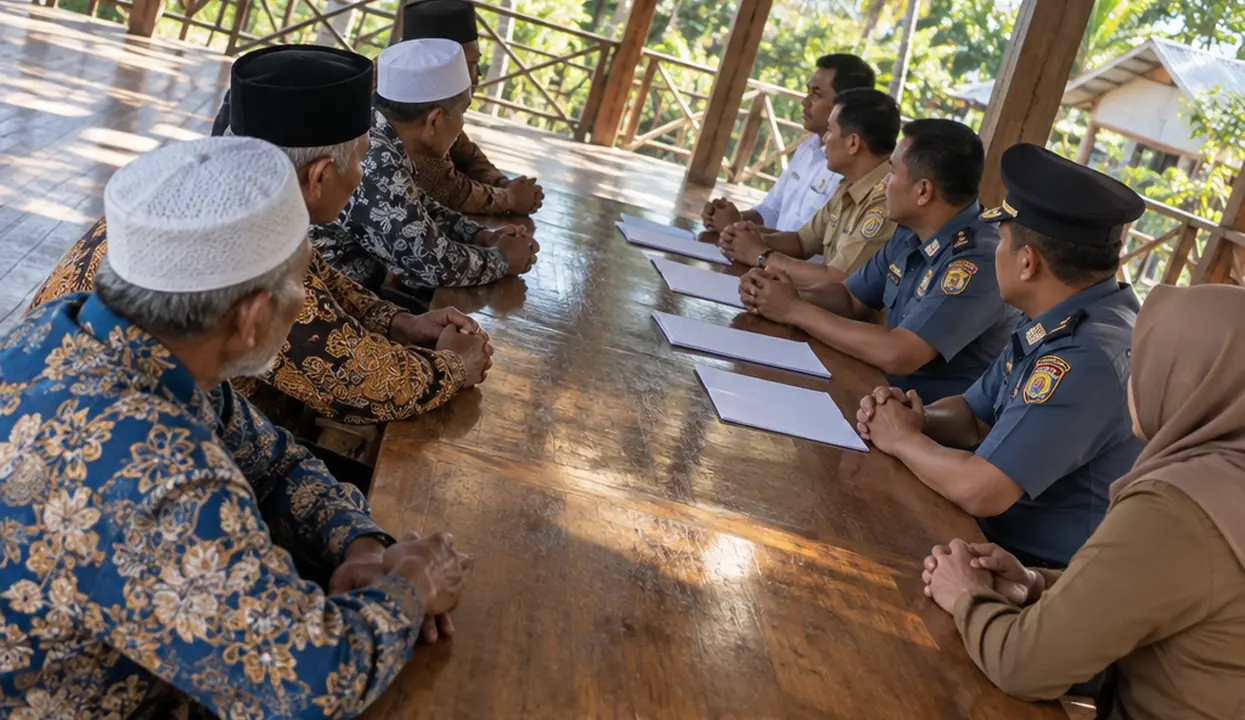
In the island province of Basilan, a single fatal altercation over farm boundaries rarely remains an isolated homicide. When clan feuding—known locally as rido—erupts, the shockwaves immediately disrupt regional news, municipal governance, and rural public health delivery. Barangay health stations close their doors, maternal care stops, and farming families crowd into municipal evacuation centers as armed lineages mobilize along kinship lines. Standard policing models struggle to contain these horizontal conflicts because arresting a single perpetrator frequently triggers collective retaliation by extended relatives defending family standing. A recent interior municipality boundary conflict shows how local authorities combine military deterrence with customary mediation to halt retaliatory cycles and restore community stability.
Anatomy of Rido: Overlapping Legal Regimes and Kinship Mobilization in Basilan
Rido operates as a systemic cycle of retaliatory violence between families, kinship networks, or communities driven by contested land, perceived affronts to collective honor (maratabat), or local political rivalry. Across Basilan, unchecked horizontal feuds historically persist for 10 to 30 years. Rather than burning continuously, these conflicts cycle through dormant intervals lasting 18 to 36 months before a chance encounter between rivals at a municipal market re-ignites armed hostilities.
Three overlapping legal frameworks govern daily disputes in the province: the national statutory code, Sharia personal law, and customary indigenous traditions (adat) practiced by Yakan, Tausug, and Sama communities. Friction frequently ignites where these systems collide over agricultural real estate. Across 5- to 20-hectare coconut and rubber farms, families regularly hold competing claims over the exact same soil. One lineage may possess an unrecorded ancestral claim recognized by village elders, while a rival family holds a Department of Agrarian Reform Certificate of Land Ownership Award (CLOA) or a Spanish-era Torrens title.
The widespread proliferation of loose, unlicensed firearms transforms these administrative boundary overlaps into acute security & justice crises. When a boundary argument turns lethal, statutory law enforcement treats the event as an individual criminal act requiring police investigation, fiscal indictment, and judicial trial. Yet in a social architecture governed by maratabat, an injury to one clan member registers as an attack on the entire lineage. Provincial security planners found that treating clan feuds strictly as criminal homicide investigations failed because arresting a single suspect prompted second- and third-degree relatives to launch retaliatory strikes. When kinship networks mobilize for collective defense, standard police warrants cannot deter somewhere around thirty armed cousins who view state intervention as partisan interference. What mechanism can halt a feud when the state's statutory arrest warrant itself acts as an escalation trigger?
Roadblocks Within Hours: How a Roughly 3.5-Hectare Rubber Boundary Dispute Escalated
The speed of kinship mobilization leaves municipal authorities almost no margin for investigative delay. In a recent confrontation in an interior Basilan municipality, two prominent lineages clashed over a newly cleared rubber farm boundary covering approximately 3.5 hectares, where unrecorded ancestral occupancy overlapped with formal agrarian reform documentation. Shots fired along the tree line rapidly triggered armed posturing across the surrounding barangay.
Barangay monitoring teams assessed the altercation as a high-tier escalation risk within 4 hours of the initial shooting. Two specific field indicators drove that assessment: the rapid arrival of armed cousins from neighboring towns and the abrupt withdrawal of children from the local elementary school. Parents in conflict-affected zones read kinship movements long before official police blotters record an incident.
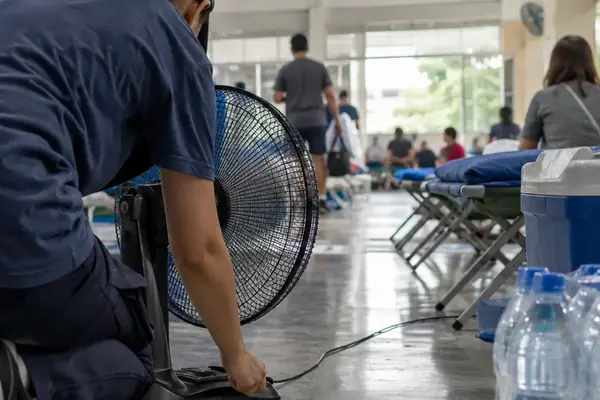
Within 6 to 12 hours of the boundary shooting, both lineages erected makeshift checkpoints along the primary barangay access road. Each side mobilized between 15 and 25 armed kinsmen carrying unlicensed M16 and M14 rifles, effectively severing farm-to-market transport and blocking rural health workers from reaching interior sitios. Within 24 hours, preemptive civilian evacuation saw close to 42 households—approximately 210 residents—relocate to the municipal gymnasium to avoid crossfire.
Field Escalation Indicators (Hours 0–24)
- Hour 4: Barangay monitors log the arrival of armed relatives from adjacent municipalities and sudden student withdrawals from the barangay elementary school.
- Hours 6–12: Rival lineages establish roadblocks along barangay access routes, deploying 15 to 25 kinsmen armed with unlicensed M16 and M14 rifles.
- Hour 24: Nearly 42 farming households (around 210 civilians) evacuate their homes for the municipal gymnasium, halting local copra and rubber harvesting.
Inaction in this narrow window carries severe consequences for both public health and regional stability. Sudden displacement into crowded municipal gymnasiums strains local sanitation resources and interrupts routine childhood immunization and tuberculosis monitoring. From a security standpoint, horizontal family feuds in Basilan rarely remain isolated if left to fester. Extended lineages frequently include members or relatives by marriage affiliated with armed partisan groups, meaning a localized boundary clash risks drawing in larger insurgent formations and paralyzing municipal governance.
Assembling the Hybrid Coalition and Executing the Nine-Day Shuttle Diplomacy
Faced with entrenched roadblocks and over two hundred displaced residents, municipal officials initially weighed deploying a joint police and army strike force to forcibly disarm both family compounds. They discarded that option after intelligence officers warned that a direct kinetic raid would either unite both clans against state forces or draw in Moro Islamic Liberation Front (MILF) base command affiliates tied to the families by marriage. Neither state police nor traditional elders held enough unilateral leverage to compel both lineages to stand down independently. State forces possessed firepower but lacked kinship legitimacy; traditional elders held moral authority but lacked the physical deterrence needed to guarantee that one clan would not ambush the other during a pullback.
To bridge this gap, the mayor's office assembled a multi-stakeholder mediation coalition. Each actor performed a distinct operational role:
- Municipal Officials: Provided institutional backing, logistics, and access to the municipal peace and order fund.
- Ulama (Islamic Scholars): Offered religious framing grounded in Quranic principles of reconciliation and the sanctity of life.
- Council Elders (Bantay): Invoked customary Yakan and Tausug adat precedents to calculate restitution and protect family standing.
- Police and Military Units: Secured the outer perimeter and verified weapon withdrawals without entering the family compounds.
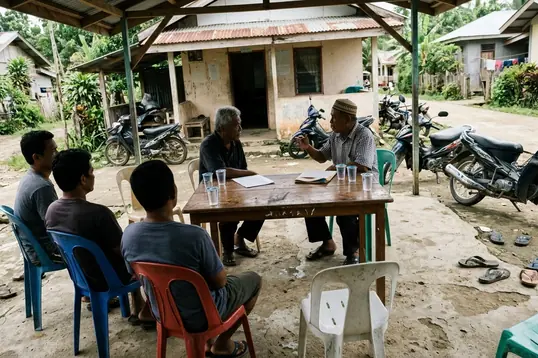
Rather than bringing the aggrieved patriarchs into the same room while tempers were raw, the coalition initiated a shuttle diplomacy phase. Neutral emissaries conducted 11 separate back-and-forth visits between the rival compounds over a 9-day period. Through these indirect negotiations, the emissaries established a demilitarized buffer zone of about 1.5 kilometers separating the two lineages, monitored around the clock by two infantry platoons.
Before the coalition permitted any face-to-face dialogue, mediators enforced a strict physical prerequisite: both lineages had to pull back heavy firearms at least 3 kilometers from the disputed agricultural boundary covering an estimated 3.5 hectares. Only after military monitors verified that the M16 and M14 rifles had been moved beyond the 3-kilometer mark did the emissaries schedule formal settlement deliberations.
Blood Money, Cadastral Verification, and the Day-14 Kanduli Compact
Once the physical buffer held, I examined how the municipal coalition structured the closed-door deliberations to address both material loss and collective honor. Purely judicial prosecution through state courts often leaves underlying kinship grievances unresolved; locking one relative in a provincial jail does not settle who owns the rubber trees, nor does it soothe the injured maratabat of a grieving lineage. Consequently, mediators bypassed formal prosecutorial affidavits—which both families viewed as a dishonorable surrender to state courts—and negotiated a hybrid customary settlement.

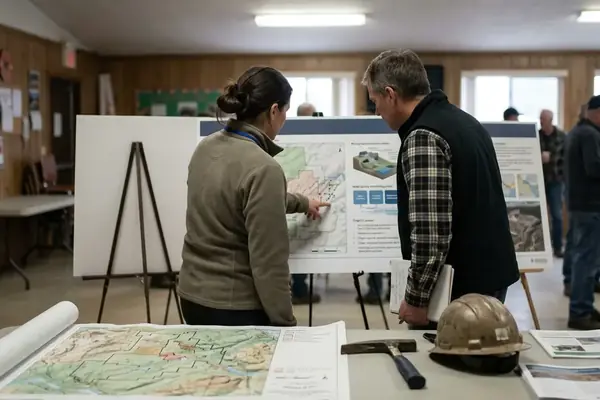
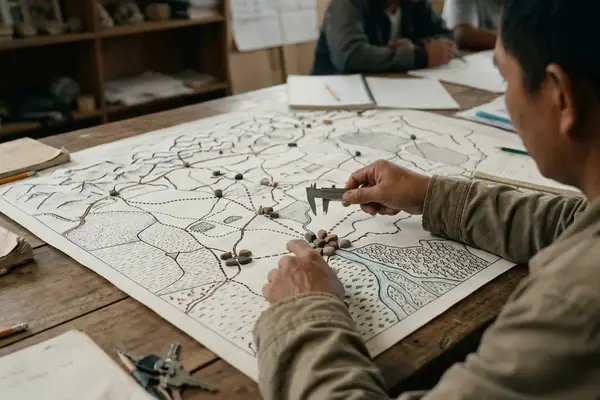
The negotiation mechanics centered on pairing customary blood money restitution (diyat) with technical land verification. Mediators finalized the diyat at PHP 350,000 to cover funeral and medical expenses. The funds were pooled from the municipal peace fund alongside clan contributions. Structuring the payment as a joint community and municipal contribution preserved the collective face of the paying lineage, preventing the restitution from looking like a humiliating tribute paid to a victor. Simultaneously, the Municipal Peace and Order Council funded an immediate joint cadastral survey to resolve the underlying clash between the ancestral claim, the CLOA certificate, and the Torrens title boundaries.
This hybrid approach can contain internal lineage disputes, though customary diyat settlements fail to hold when third-party spoilers—such as transnational kidnap-for-ransom syndicates or foreign-linked militant factions—finance one of the feuding lineages outside the lineage elders' control. Because this interior dispute remained rooted in agricultural boundaries and kinship honor, the elders retained full command over their armed youths.
On Day 14, the coalition convened both lineages at the municipal hall to ratify the formal peace covenant. Before 120 witnesses, clan patriarchs signed the settlement agreement and swore oaths of non-aggression over the Quran. The rival families then shared a public ritual meal (kanduli), signaling to the entire municipality that the blood debt was extinguished and normal social commerce could resume. Within 72 hours of the signing, joint survey teams and elders placed permanent concrete boundary markers along the contested 400-meter farm line, eliminating the physical ambiguity that sparked the shooting.
The 48-Hour Surrender Clause: Institutionalizing Post-Settlement Verification
Signing a covenant over the Quran stops the immediate shooting, but sustaining peace requires hard verification protocols that survive long after the ceremonial meal concludes. Fragile truces in regional news frequently collapse when a single hot-headed cousin or nephew ignores the patriarchs and fires a weapon near the buffer zone. Under traditional norms, the offending youth's family might instinctively shield him, immediately re-igniting the war.
To sever that trigger, the Municipal Peace and Order Council established a permanent joint verification committee bound by a strict rogue-kinsman protocol. Under the signed covenant, clan patriarchs must physically surrender any kinsman who violates the buffer zone within 48 hours. This clause explicitly strips the offending individual of collective clan protection (maratabat), transforming him from a family defender into an isolated lawbreaker whom both families agree to hand over to state police.
| Intervention Phase | Timeframe Window | Lead Actors | Operational Objective & Verification Metric |
|---|---|---|---|
| 1. Early Warning & Containment | Hours 0 to 12 | Barangay Peace Action Teams, Municipal Police | Log school withdrawals and armed movements; contain the 15-to-25-rifle roadblock mobilization; evacuate 42 at-risk households. |
| 2. Shuttle Diplomacy & Buffer Creation | Days 1 to 9 | Neutral Emissaries, Two Infantry Platoons | Execute 11 shuttle visits; establish a nearly 1.5-km demilitarized zone; verify pullback of heavy firearms 3 km from the disputed boundary. |
| 3. Restitution & Covenant Ratification | Days 10 to 17 | Mayor's Office, Ulama, Council Elders (Bantay) | Disburse PHP 350,000 pooled diyat; ratify oath over the Quran before 120 witnesses; share kanduli; set concrete markers along the 400-m line within 72 hours. |
| 4. Probationary Monitoring & Return | Day 16 to Month 6 | Joint Verification Committee, Barangay Tanods, Elders | Return 210 residents within 48–96 hours; conduct bi-weekly inspections for 6 months; enforce the 48-hour rogue-kinsman surrender rule. |
Post-settlement monitoring spans a mandatory 6-month probation window featuring bi-weekly joint inspections conducted by barangay tanods, municipal police representatives, and two designated elders from each family. With these safeguards active, the 42 displaced farming households returned to their plots between 48 and 96 hours after the kanduli compact. Families resumed copra processing and rubber tapping under temporary military road patrols, and barangay health workers re-established routine clinic schedules.
As regional governance evolves through initiatives documented on the Bangsamoro Autonomous Region in Muslim Mindanao official portal, local administrators face a structural choice regarding security & justice integration. As formal statutory institutions expand across the Bangsamoro territories, will policymakers codify and fund these hybrid elder-led mediation mechanisms within municipal budgets, or risk sidelining the very grassroots networks that prevent local land disputes from igniting into armed conflict?








Comments
No comments so far.
Add Your Thoughts