
Establishing a Minimum Credible Deterrent
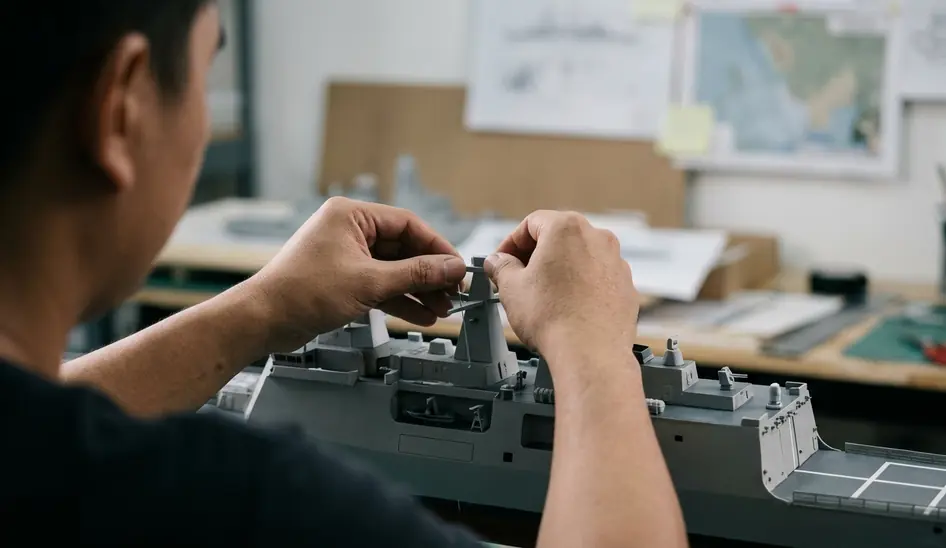
I approach security sector reform by examining the foundational architecture of defense planning. The 15-year Armed Forces of the Philippines (AFP) modernization program represents a fundamental shift in institutional priorities. Following the July 12, 2016, UN Permanent Court of Arbitration ruling, the strategic context demanded an immediate recalibration of national defense strategies. Under Secretary Delfin Lorenzana, the Department of National Defense (DND) assumed the primary procurement role, tasked with translating legal victories into physical maritime presence.
Defense planners evaluated immediate territorial defense needs against internal security requirements. They ultimately prioritized maritime domain awareness assets over heavy ground armor to establish a baseline defense posture. Tracking data indicates the procurement window for the second modernization phase spanned 2018 to 2022. This phase targeted multi-role patrol vessels with a displacement range of roughly 2,400 to 2,600 tons.
Quick Tip: When evaluating naval procurement, always cross-reference the vessel's displacement with the average sea state of its intended patrol sector.
This specific tonnage provides an optimal balance between coastal maneuverability and extended patrol endurance. Heavy armor serves little purpose in an archipelagic doctrine where the primary threats materialize over the horizon. How does a developing defense establishment sustain such a rapid acquisition tempo while managing legacy systems?
Revitalizing the Philippine Air Force
On January 26, 2017, a surgical air strike in Butig targeted Abu Sayyaf commander Isnilon Hapilon. This operation tested newly acquired assets in a high-stakes, real-world combat application. The mission required a loiter time of roughly 45 to 55 minutes over the target area. Pilots used unguided 500-pound munitions dropped from an altitude of approximately 4,000 to 5,500 feet, based on reported figures. The effectiveness of the new light fighter aircraft in close air support roles varied significantly depending on the density of the jungle canopy and cloud cover in the specific operational sector.
Procurement committees initially considered acquiring surplus fourth-generation fighters from allied stockpiles. Evaluating the long-term maintenance logistics and the immediate need for a dual-role platform led them in a different direction. They selected the KAI FA-50PH light fighter aircraft to replace the long-decommissioned Northrop F-5 Tigers.
The technical specifications align precisely with this dual-role mandate. The aircraft features General Electric F404-102 turbofan engines, Full Authority Digital Engine Control (FADEC), and AIM-9 Sidewinder compatibility. Reporting confirmed that these systems provide a proven foundation for transitioning pilots to modern avionics. The FADEC system alone reduces pilot workload during critical engagement phases, allowing for better situational awareness in contested airspace.
Expanding Naval and Anti-Submarine Warfare Capabilities
Naval architects mapped the deck load capacities of existing platforms before finalizing new aviation assets. The decision to integrate specific anti-submarine helicopters was driven by the requirement to match the sensor suites of the newly acquired frigates. Consequently, the DND procured AW-159 Wildcat anti-submarine warfare helicopters from AgustaWestland.
These airframes integrate advanced naval armaments, including Sting-Ray torpedoes, Sea Skua missiles, and CRV7 rockets. Integrating these weapons transforms a standard patrol vessel into a credible sub-surface threat deterrent.
Note: The full integration of the anti-submarine warfare helicopters requires the host frigates to be operating within a sea state of 4 or below for safe launch and recovery procedures.
Humanitarian Assistance and Disaster Response
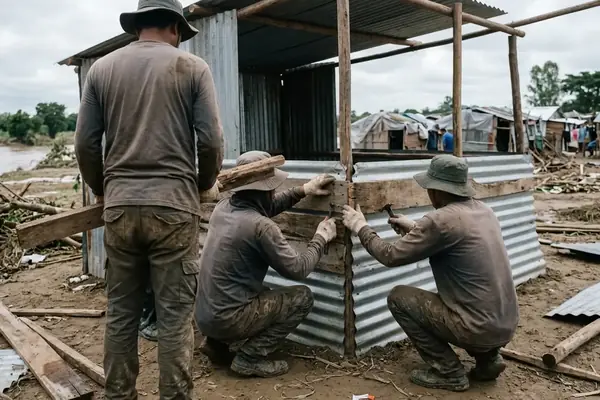
Simultaneously, the commissioning of the Strategic Sealift Vessel (SSV) BRP Tarlac (LD-601) expanded humanitarian assistance and disaster response (HADR) capabilities. The SSV design accommodates a sustained deployment of 3 to 4 weeks without resupply. It carries a payload of up to around 2,800 tons of relief goods and heavy engineering equipment.
Operational realities often complicate theoretical capabilities. Delays in port infrastructure upgrades restricted the operational docking locations for the new Strategic Sealift Vessels during their first 14 to 18 months of service. A ship designed to deliver thousands of tons of relief material requires deep-water ports capable of handling its draft, highlighting the friction between platform acquisition and facility readiness.
Personnel Readiness and Joint Operations
Hardware acquisitions require parallel investments in human capital—a principle frequently overlooked in procurement debates. Executive Order No. 03, signed by Rodrigo Duterte: President of the Philippines, mandated an increase in combat pay for AFP and PNP personnel. To implement this directive, budget officials conducted a joint audit with military comptrollers. They cross-referenced deployment rosters with active combat zone designations to establish a tiered compensation framework.
The combat pay adjustment increased the monthly allowance from a baseline of PHP 500 to a fixed rate of PHP 3,000. This adjustment was retroactive to the deployment cycles beginning September to November 2016. Financial recognition directly impacts unit morale during extended deployments.
The integration of new junior officers from the PMA SALAKNIB Class of 2017 into the modernized force structure injects fresh tactical leadership. These officers train directly on the newly acquired platforms, bypassing the legacy systems that defined previous generations. Enhancing interoperability remains a priority, achieved through annual Balikatan bilateral military exercises with US forces. Joint training scenarios frequently extend to regional hubs like San Fernando City, La Union, testing coastal defense coordination under simulated combat conditions.
Through a multi-year research collaboration with regional defense colleges, comparisons demonstrate that interoperability exercises accelerate the tactical proficiency of newly commissioned officers. I must add that while these procurement cycles enhance tactical capacity, this analysis of defense acquisitions does not account for the parallel development of civilian oversight mechanisms.
Summary: A certified modernization program balances high-end asset procurement with the guaranteed readiness of the personnel operating them.










Comments
No comments so far.
Add Your Thoughts